Cucumber Diseases: Symptoms, Causes, and Control Measures
Cucumber Diseases: Symptoms, Causes, and Control Measures
Cucumber is widely cultivated in greenhouses and open fields, but it is a crop sensitive to changes in humidity, temperature, and care. If diseases are not identified in a timely manner, it can lead to leaf drying, stunted growth, fruit deformation, and a sharp decline in yield.
When diagnosing a disease, it is not correct to make a conclusion based on just a single leaf. The leaves, stem, root, fruit, and general conditions in the greenhouse should be inspected together.
1. Fusarium Wilt and Root Rot
Fusarium and other soil-borne diseases can cause weakening and wilting of cucumber seedlings.
Key Symptoms
The cotyledon leaves of young seedlings turn yellow and droop. In some cases, the lower part of the stem near the soil darkens or thins out. In mature plants, wilting of one or a few leaves is observed initially, followed by the drying up of the entire vine.
When the internal part of the root and stem is cross-cut, brownish discoloration may appear in the vascular tissues. If soil moisture is excessive, root rot develops even faster.
Control and Prevention
Infected plants must be uprooted and removed. Using healthy, tested seedlings, avoiding waterlogging during irrigation, and practicing crop rotation reduce disease risks. In greenhouses, special attention should be paid to the cleanliness of soil, containers, and tools.
It is often difficult to treat infected plants suffering from soil-borne vascular wilt diseases. Therefore, resistant varieties, sanitation, and prevention are the main protective measures.
2. Downy Mildew — Peronosporosis
Downy mildew is considered one of the most dangerous leaf diseases of cucumbers. It spreads rapidly under humid and cool conditions.
Key Symptoms
Yellowish, angular spots bounded by leaf veins appear on the upper surface of the leaves. Under high humidity, a grayish or purplish moldy layer may be visible on the underside of the leaf.
As the disease progresses, the spots turn brown, the leaves dry up, and the plant's photosynthetic capacity decreases.
Control and Prevention
It is recommended to ventilate the greenhouse regularly, prevent leaves from remaining wet for long periods, and use drip irrigation whenever possible. Morning irrigation is preferred.
Carefully removing infected leaves, disposing of plant debris outside the greenhouse, and selecting disease-resistant varieties are essential. In case of severe infestation, crop protection products approved for cucumbers in your region should be applied based on an agronomist's recommendation.
3. Powdery Mildew
Powdery mildew occurs both in open fields and in greenhouses. The disease impairs leaf function, reducing yield volume and the length of the harvesting period.
Key Symptoms
White spots resembling dusted flour appear on the surface of the leaves. Initially small, these spots later merge to cover large areas of the leaf.
Infected leaves turn yellow, dry out, and the plant begins to age prematurely. As a result, fruits may remain small or the fruiting period may be shortened.
Control and Prevention
Avoid planting too densely, improve air circulation in the greenhouse, and remove old leaves in a timely manner. It is also important to avoid excessive application of nitrogen fertilizers.
When using plant protection products, continuous use of chemicals with the same mode of action is not recommended, as this can lead to resistance in the pathogen.
4. Anthracnose
Anthracnose can infect cucumber leaves, stems, and fruits. The disease develops particularly actively in moist conditions.
Key Symptoms
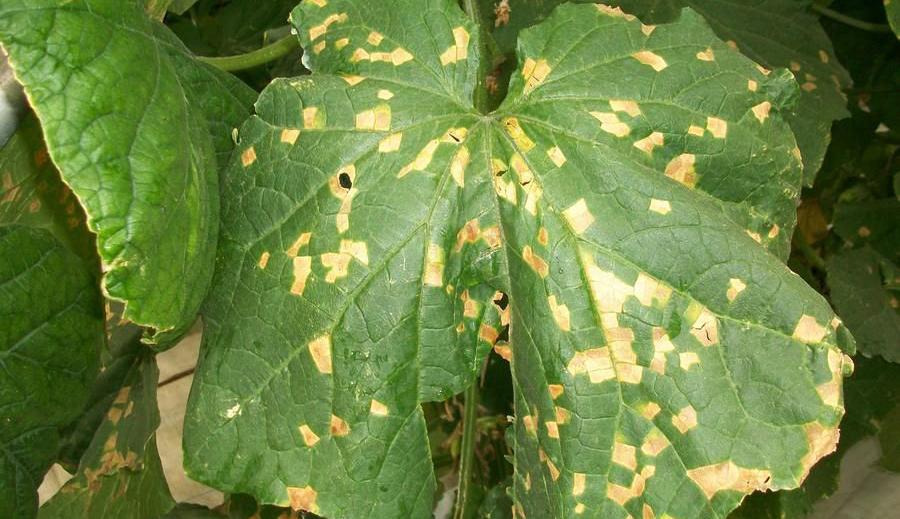
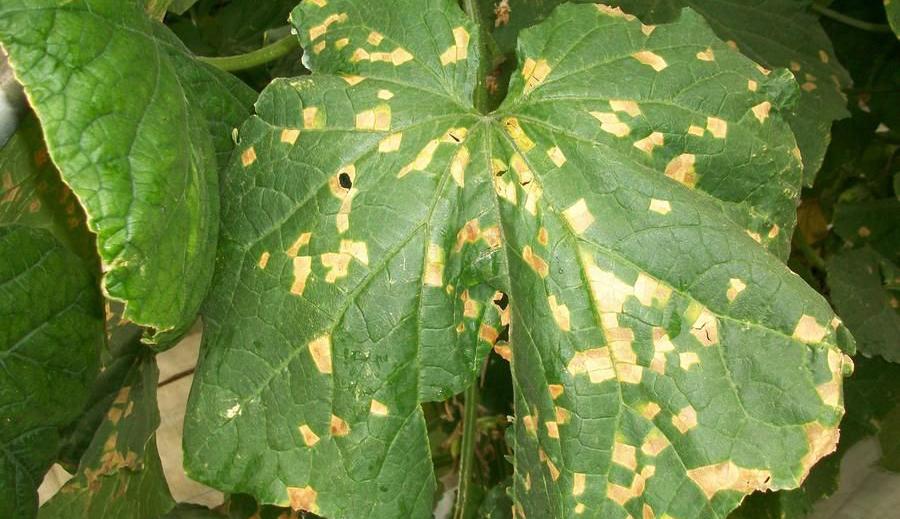
Irregular brown spots with yellowish borders appear on the leaves. As the central part of the spots dries and falls out, the leaves take on a tattered or perforated appearance.
Sunken, rounded black or brown lesions may form on the fruits. During periods of high humidity, pinkish or light-colored spores can be seen on these lesions.
Control and Prevention
It is recommended to use healthy seeds and seedlings, destroy infected plant debris, and avoid planting cucurbit crops continuously in the same field.
Overhead irrigation can accelerate the spread of the disease. Therefore, applying water directly to the root zone is preferable. Working among wet plants also promotes the spread of infection via hands, clothing, and tools.
5. Cladosporium Leaf Spot — Cucumber Scab
Cladosporium leaf spot is a fungal disease that causes lesions on leaves and fruits. It favors cool and humid conditions.
Key Symptoms
Whitish-gray spots with a yellow margin appear on the leaves. Over time, the centers of the spots fall out, leaving small holes in the leaves.
Sunken lesions develop on the fruits, and their surface may become covered with a velvety greenish-black layer. Severely infected fruits stop growing and become unfit for consumption.
Control and Prevention
Using resistant varieties is one of the most effective measures. Do not plant cucurbits successively in the same spot, clear crop residues from the area, and avoid working among wet leaves.
Seeds, tools, work clothes, and plant residues can cause the disease to spread to new fields.
6. Cucumber Mosaic Virus and Other Viral Diseases
Distinguishing viral diseases from fungal diseases is not always easy. An accurate diagnosis may require expert inspection or laboratory testing.
Key Symptoms
An irregular alternation of light green, yellow, and dark green patches is observed on the leaves. Leaves become puckered, reduced in size, or abnormally shaped.
Plant growth becomes stunted. Colored rings, spots, raised bumps, and deformations may appear on the fruits.
Control and Prevention
There is no simple remedy to cure a virus-infected plant. The infected vine must be uprooted and disposed of away from other plants.
It is important to use high-quality seeds, control weeds around the greenhouse, and manage aphids and other virus-vector pests. Tools should also be disinfected regularly.
7. Root-Knot Nematode
Nematodes are very small soil-inhabiting pests that damage cucumber roots.
Key Symptoms
Even when well-irrigated, the plant wilts during hot hours. Leaves turn yellow, vine growth slows down, and yield declines.
When roots are inspected, galls or swellings of various sizes are detected. This symptom indicates the presence of root-knot nematodes.
Control and Prevention
It is beneficial to test the soil before planting in a new field. Use only healthy seedlings, and do not transfer infested soil to other areas via tools or machinery.
Crop rotation, soil solarization, and biological methods should be selected based on local conditions and nematode species. For severely infested fields, a specific protection plan should be drawn up together with an agronomist.
10 Tips to Prevent Cucumber Diseases
- Use healthy seeds and seedlings obtained from a reliable producer.
- Choose disease-resistant varieties adapted to your region.
- Do not plant cucumbers repeatedly in the same field.
- Ensure proper air circulation in the greenhouse.
- Water the soil around the roots, not the leaves.
- Irrigate in the morning hours.
- Promptly remove diseased leaves and plants.
- Keep scissors, knives, containers, and other equipment clean.
- Control weeds and disease-vectoring pests.
- Use plant protection products only after a clear diagnosis, strictly following label instructions and agronomist advice.
Conclusion
Leaf yellowing or plant wilting in cucumbers is not always a sign of an infectious disease. Improper watering, root damage, nutrient deficiencies, sharp temperature fluctuations, and saline soil can cause similar symptoms.
Therefore, it is essential to determine the exact cause of the issue before applying any chemical treatment. If unknown spots or wilting symptoms appear on your cucumbers, upload clear photos of the front and back of the leaf, stem, fruit, and root to the Agrosoft platform. Expert recommendations will help prevent incorrect treatments.