
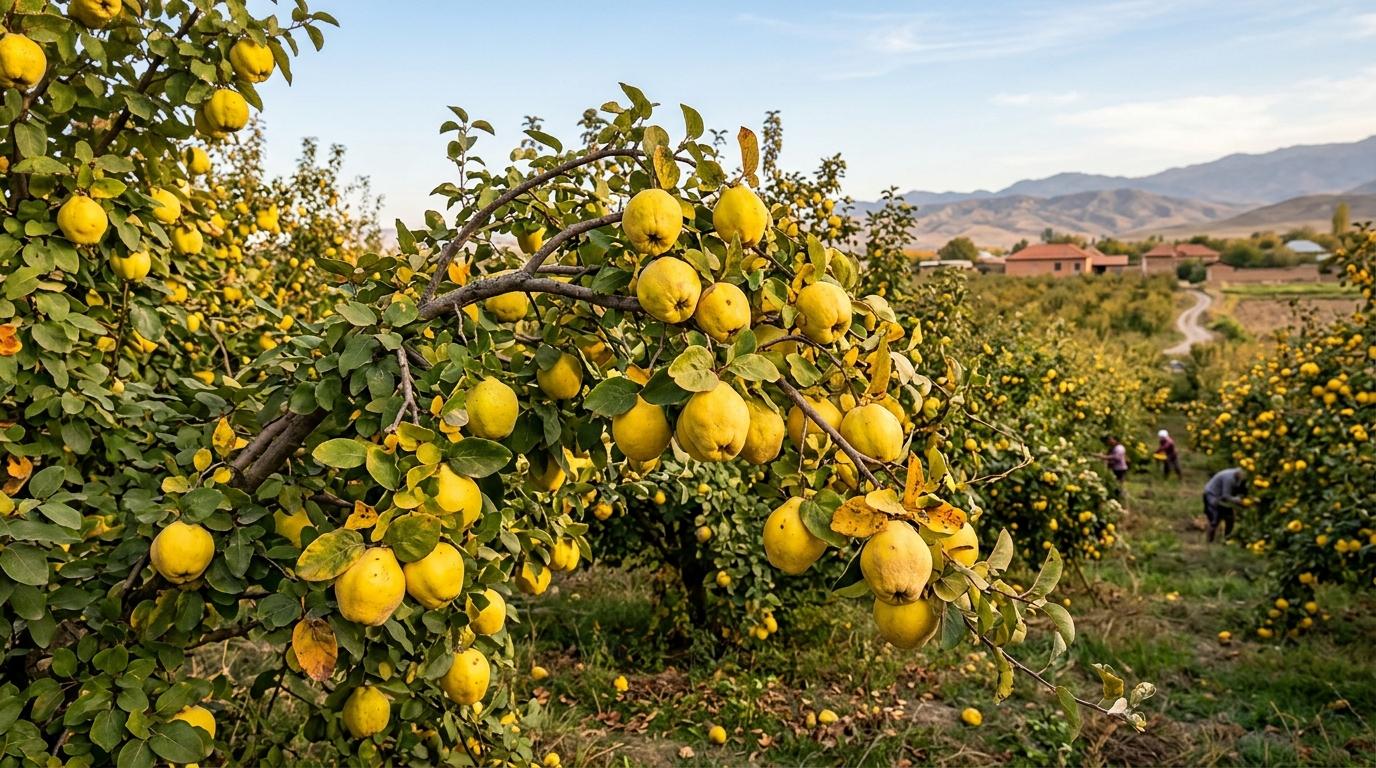
Growing Quince: A Practical Guide for Farmers
05, Nov 2026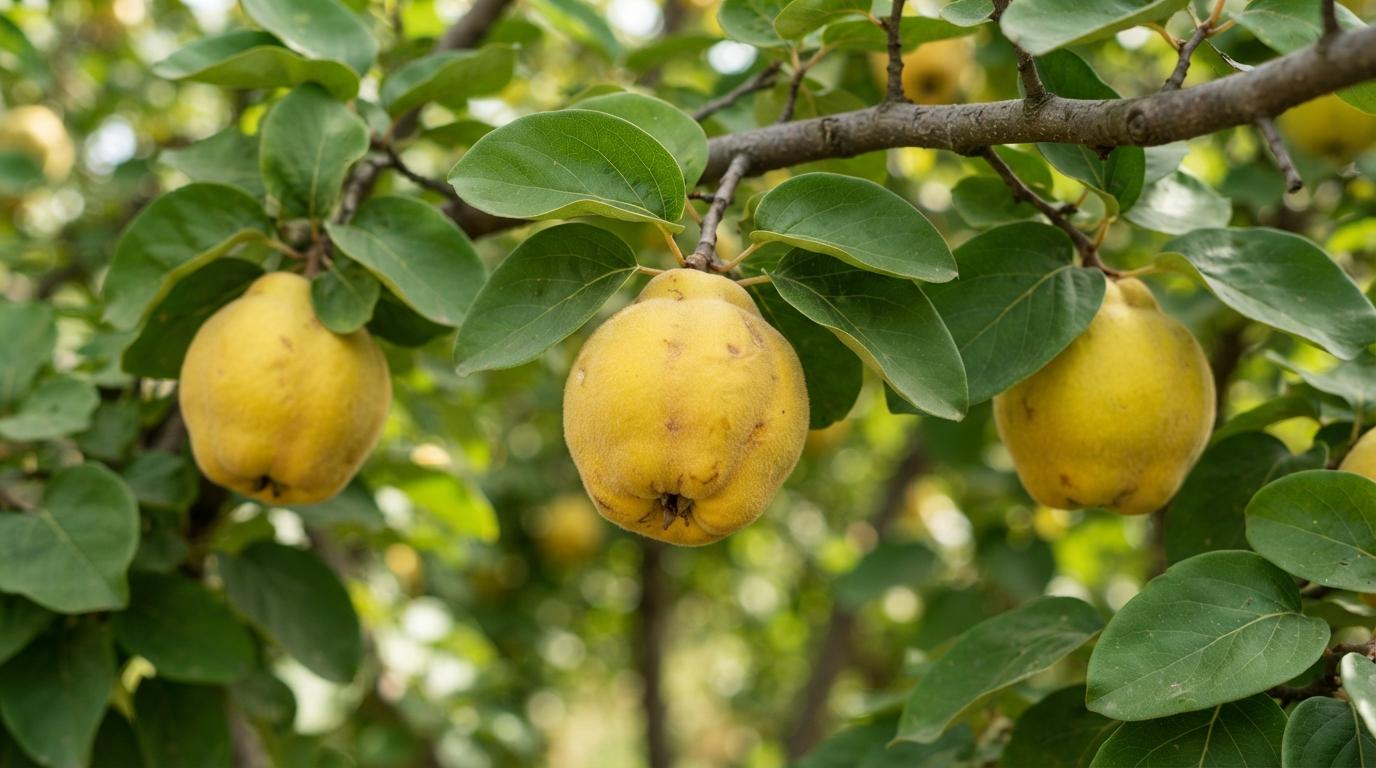
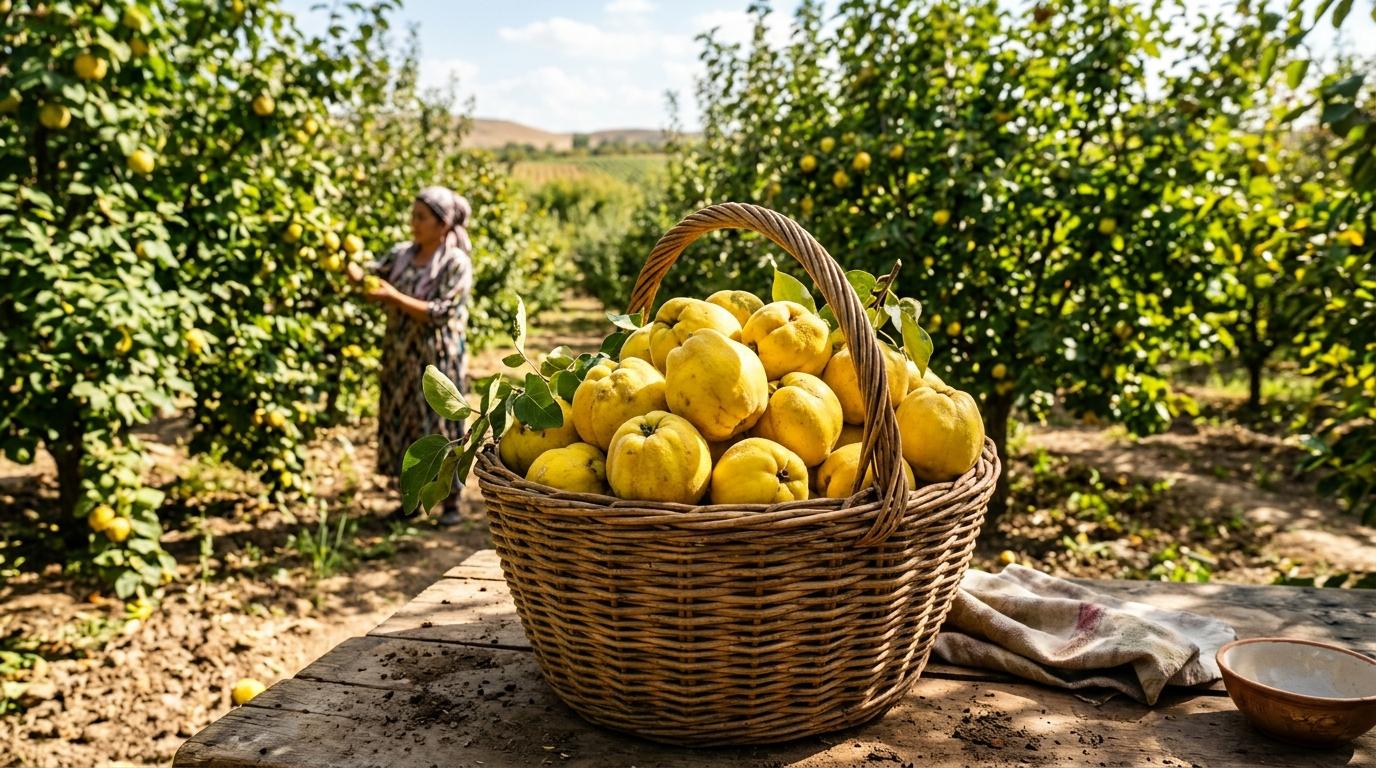
Quince (Cydonia vulgaris) is a crop perfectly suited to the climate of Uzbekistan. It is drought-tolerant, handles hot summers well, and is a valuable addition to any orchard. Proper care for this tree ensures a bountiful harvest of aromatic and healthy fruits.
Variety Selection and Planting
- For Uzbekistan's conditions, proven varieties like 'Kaunchi-10', 'Zolotistaya' (Golden), and 'Teplovskaya' are highly recommended.
- It is best to plant saplings in the autumn or early spring once the soil has warmed up.
- Choose well-lit areas protected from strong winds, as quince thrives in full sun.
Irrigation and Fertilization
- Quince responds well to regular watering, especially during the fruit-setting period, which directly impacts fruit size and juiciness.
- During hot summer months, use mulch around the base of the tree to retain soil moisture.
- Apply nitrogen fertilizers in the spring for growth, and phosphorus-potassium fertilizers in the autumn to prepare the tree for winter and improve fruit quality.
Harvesting and Storage
- Harvesting typically takes place in September and October when the fruits turn a bright yellow color.
- Pick the fruits carefully to avoid bruising the skin, as damaged quince spoils quickly.
- Store the harvest in a cool, dark place or in the vegetable compartment of a refrigerator. Over time, quince becomes softer and more aromatic.
Common Mistakes and Tips
A common mistake is harvesting unripe fruits that still have a greenish hue; these will not ripen properly in storage. Important note: Always wash the fruits thoroughly before consumption to remove the fuzzy coating, which can cause throat irritation or allergies. Also, remember that quince branches can be used when cooking meat dishes—they impart a unique aroma, especially when grilling over coals.
Source: SuperSadovnik (maqola)
Images may be generated with AI.