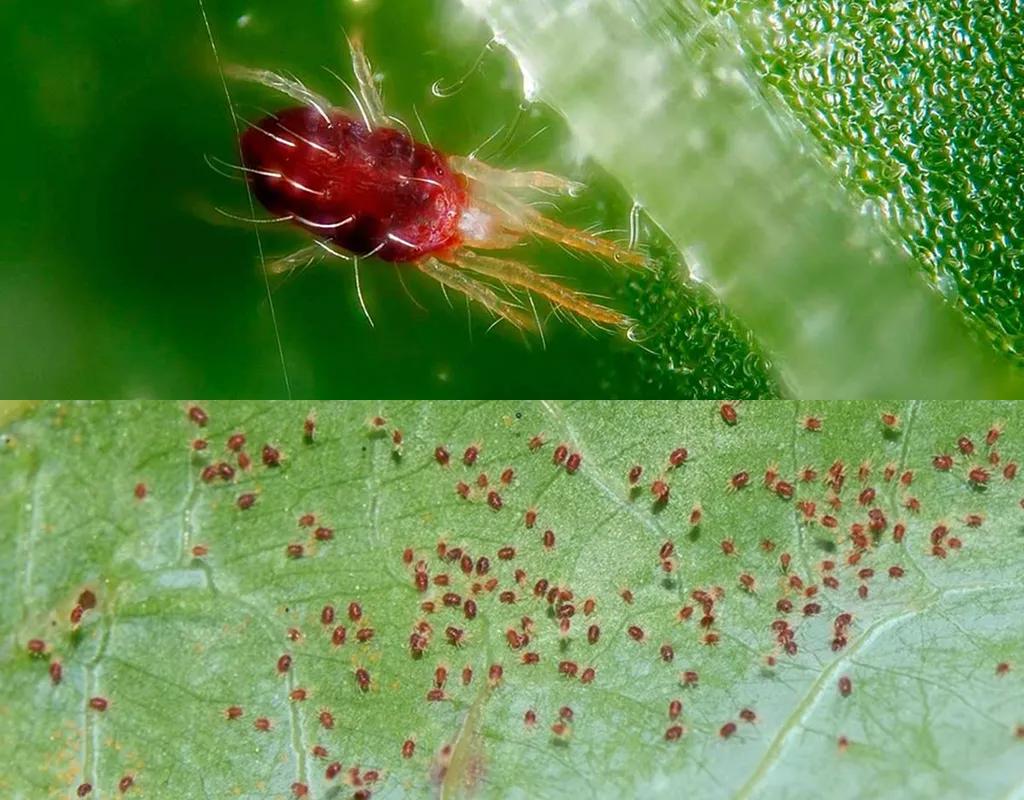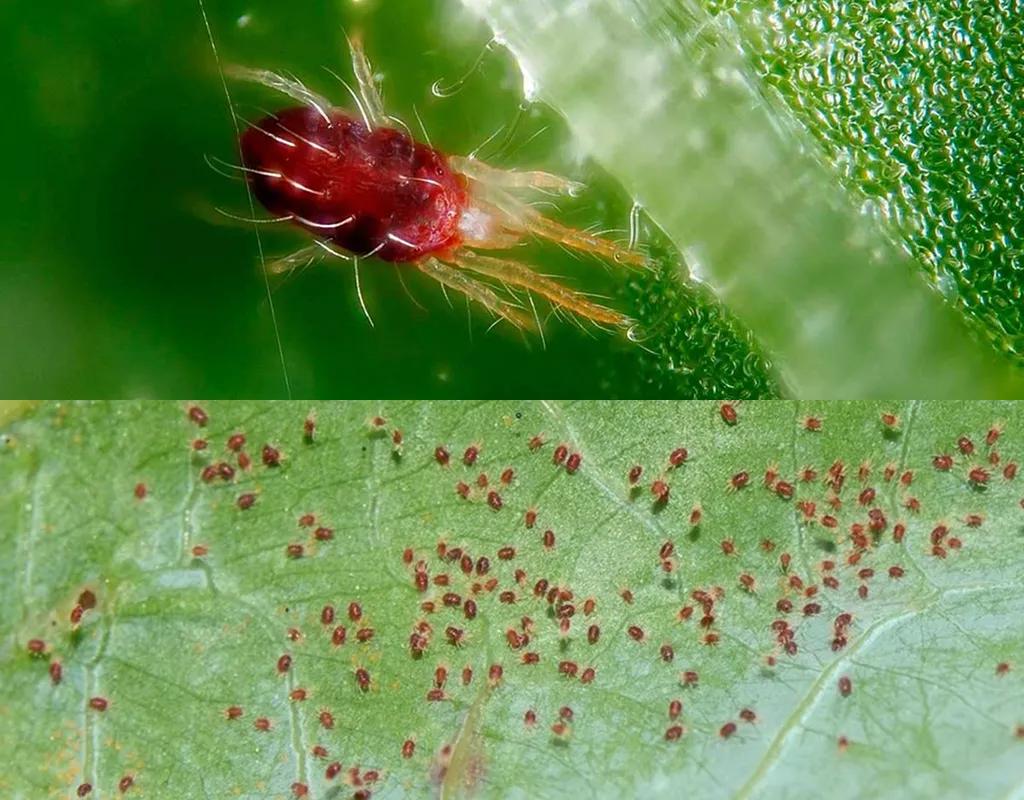
Spider Mite Damage on Vegetables and Control Measures
The spider mite is one of the most dangerous pests of vegetable crops, causing plant weakening and yield reduction by sucking juice from the leaves. Timely pest control is essential for saving the crop. Spider mites (members of the Tetranychidae family) are small but very dangerous pests that damage tomatoes, cucumbers, eggplants, peppers, potatoes, and many other vegetable crops. They multiply rapidly, especially in hot and dry weather conditions.
The pest settles on the underside of the leaves and feeds by sucking the sap of plant cells. As a result, small white or yellowish spots appear on the leaves. Over time, these spots enlarge, leading to yellowing and drying of the leaves.
In severely damaged plants, leaves fall off, the photosynthesis process slows down, and the quality and quantity of the yield decrease sharply. In some cases, spider mites can cause crop losses of up to 30–50 percent.
One of the main signs of the pest is a fine web appearing between the leaves. Especially when the infestation is severe, the young shoots and leaves of the plant become covered with webbing.
Hot and dry weather creates favorable conditions for the rapid development of spider mites. During a single season, it can produce several generations and spread over large areas in a short period.
Agrotechnical control measures include destroying crop residues, clearing weeds, watering crops properly, and establishing crop rotation. These methods limit the population growth of the pest.
The use of predatory mites and beneficial entomofauna yields good results in biological control. This method is environmentally safe and widely used in greenhouses.
Regular monitoring of plants and taking action at the first signs significantly reduces damage. Controlling early-detected pests is much easier.
If necessary, recommended acaricide and insectoacaricide preparations can be applied based on expert recommendations. When using preparations, safety rules and application rates must be strictly observed.
Despite its small size, the spider mite can cause great damage to vegetable crops. Through regular monitoring, agrotechnical practices, and timely control measures, the crop can be effectively protected from this dangerous pest.