
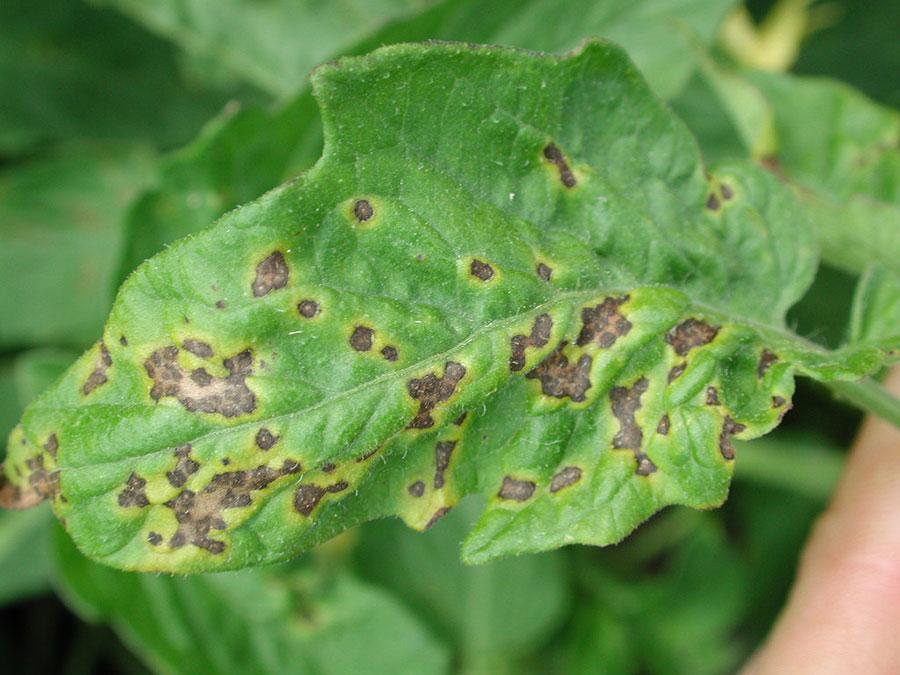
Bacterial Spot
Bacterial spot is a devastating disease that frequently impacts vegetable production in Uzbekistan, particularly during the hot, humid periods of the growing season or within greenhouse environments. It is caused by various species of the bacterium Xanthomonas, most notably Xanthomonas campestris pv. vesicatoria. This pathogen thrives in our irrigated fields, where it can rapidly reduce photosynthetic capacity and cause significant yield losses if left unmanaged.
1) What it is and its pathogen
Bacterial spot is a seed-borne and soil-borne disease caused by Xanthomonas bacteria. These pathogens colonize the intercellular spaces of plant tissues, leading to necrosis and tissue collapse. In Uzbekistan's climate, the bacteria can survive on crop debris in the soil or on alternative weed hosts, becoming active as soon as temperatures rise and moisture is available.
2) Which crops it affects
The disease primarily targets solanaceous crops. In Uzbekistan, it is most economically significant in tomatoes and peppers. It can affect these plants at any growth stage, from seedling nurseries to mature plants in open fields or greenhouses.
3) Symptoms
- Leaves: Small, water-soaked spots that turn dark brown or black with a yellow (chlorotic) halo. As the disease progresses, spots may coalesce, causing leaves to wither and drop prematurely.
- Stems: Elongated, dark, scab-like lesions that can weaken the plant structure.
- Fruits: Initially small, raised, blister-like spots that eventually expand into large, dark, sunken, corky scabs. This renders the fruit unmarketable.
- Roots: While the pathogen is primarily foliar, severe systemic infections can lead to stunted root development and overall plant decline.
4) Conditions that favour it
The bacteria thrive in temperatures between 25°C and 30°C, which are common in our summer months. High humidity, frequent rainfall, or overhead irrigation are the primary drivers of spread. The bacteria enter the plant through natural openings like stomata or through wounds caused by wind, sandstorms, or insect feeding.
5) Prevention
- Certified Seeds: Always use disease-free, certified seeds or healthy transplants to prevent initial introduction.
- Crop Rotation: Implement a 3-year rotation cycle, avoiding solanaceous crops in the same field to break the pathogen lifecycle.
- Hygiene: Remove and destroy all infected plant debris immediately after harvest; do not compost infected material.
- Irrigation Management: Switch from overhead sprinklers to drip irrigation to keep foliage dry.
- Weed Control: Manage weeds in and around the fields that may act as reservoirs for the bacteria.
6) Treatment
Management relies on a combination of biological and chemical strategies. Biological options: Applications of Bacillus subtilis or copper-based biological formulations can provide a protective barrier on the leaf surface. Chemical options: Copper-based compounds (such as copper hydroxide or copper oxychloride) are the standard for preventative control. In cases of severe pressure, systemic or translaminar active ingredients such as mancozeb or various triazoles may be used. Important: Always follow the specific product label for application rates and strictly observe the pre-harvest interval (PHI). To prevent the development of resistant bacterial strains, you must alternate between different active ingredients throughout the season.
7) Quick checklist for the farmer
- Inspect seedlings daily for small, dark spots with yellow halos.
- Ensure proper spacing between plants to improve airflow and reduce leaf wetness.
- Disinfect tools and equipment between rows to prevent mechanical spread.
- Prioritize drip irrigation to minimize water contact with leaves.
- Apply copper-based protectants before the onset of humid weather patterns.