
Cucumber Downy Mildew
What it is and its pathogen
Cucumber Downy Mildew, known locally in Uzbekistan as 'Bodring pastki chiriyotgani', is one of the most destructive foliar diseases affecting cucurbits. It is caused by the oomycete pathogen Pseudoperonospora cubensis. Unlike true fungi, this pathogen is a water mold that thrives in specific moisture conditions, making it a significant threat to both open-field production and greenhouse cultivation in our region. If left unmanaged, it can cause rapid defoliation and total crop failure within days.
Which crops it affects
The pathogen has a narrow host range, primarily targeting the Cucurbitaceae family. In Uzbekistan, it most severely impacts cucumbers (both greenhouse and field-grown), melons, watermelons, pumpkins, and squashes. While it can infect various cucurbits, cucumbers are particularly susceptible and often serve as the primary reservoir for the disease to spread to other crops.
Symptoms
The disease manifests primarily on the foliage, progressing rapidly under favorable conditions. Key symptoms include:
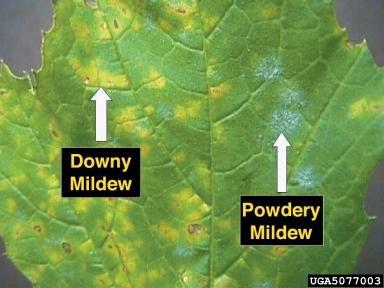
- Angular, yellow chlorotic spots appearing on the upper leaf surface, restricted by the leaf veins.
- A characteristic grayish-violet or dark-brown fuzzy growth on the underside of the leaves, corresponding to the yellow spots above.
- Leaves eventually turning necrotic (brown and brittle) and curling upwards.
- Premature leaf drop, which exposes fruits to direct sunlight, leading to sunscald and poor fruit quality.
- Stunted plant growth and reduced fruit yield due to the loss of photosynthetic capacity.
Conditions that favour it
Pseudoperonospora cubensis thrives in environments characterized by high relative humidity (above 90%) and moderate temperatures between 15°C and 25°C. In Uzbekistan, the disease often flares up during periods of heavy dew, frequent light rain, or poor ventilation in greenhouses. The spores (zoospores) are highly mobile in water and are easily spread by splashing irrigation, rain, and wind currents. While our hot, dry summers can temporarily slow the pathogen, the microclimate within dense crop canopies or poorly ventilated greenhouses remains highly conducive to infection.
Prevention
Effective management relies on an integrated approach to break the disease cycle:
- Select resistant or tolerant cucumber varieties, which are increasingly available for local conditions.
- Ensure proper plant spacing to improve air circulation and reduce humidity around the foliage.
- Use drip irrigation instead of overhead sprinklers to keep the leaves dry.
- Practice strict field hygiene by removing and destroying infected plant debris immediately after harvest.
- Implement a crop rotation cycle, avoiding cucurbits in the same field for at least 2-3 years.
- Maintain optimal ventilation in greenhouses by opening vents early in the morning to lower humidity.
Treatment
When symptoms appear, immediate action is required. Biological control options include products containing Bacillus subtilis or Trichoderma species, which can help suppress pathogen growth when applied preventatively. For chemical control, use systemic and contact fungicides. Effective active ingredients include: mancozeb, chlorothalonil, azoxystrobin, cymoxanil, metalaxyl, and fosetyl-aluminum. Always follow the specific product label for dosage and safety instructions. It is critical to alternate active ingredients from different chemical groups to prevent the pathogen from developing resistance. Always observe the mandatory waiting period (pre-harvest interval) before picking fruits for market or consumption.
Quick checklist for the farmer
- Monitor the undersides of leaves daily, especially after humid nights.
- Ensure greenhouse humidity is kept below 80% through proper ventilation.
- Avoid working in the field when plants are wet to prevent spreading spores on clothes and tools.
- Apply fungicides preventatively if weather forecasts predict consecutive days of high humidity.
- Remove and burn heavily infected plants to reduce the inoculum load in your field.