
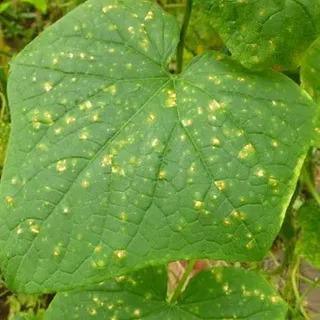
Cucumber Mosaic Virus
Cucumber Mosaic Virus (CMV) is one of the most destructive viral diseases affecting vegetable production in Uzbekistan. It is a systemic pathogen that disrupts plant physiology, leading to significant yield losses in both open-field and greenhouse environments. The virus is transmitted primarily by aphids in a non-persistent manner, meaning they can acquire and transmit the virus within seconds of feeding on an infected plant.
1) What it is and its pathogen
CMV is caused by the Cucumber mosaic virus, a member of the Bromoviridae family. It is a highly polyphagous virus, meaning it has an exceptionally wide host range. Because it is non-persistently transmitted, the virus does not circulate within the insect vector; instead, it is carried on the aphid's mouthparts, making control extremely challenging once the virus enters a field.
2) Which crops it affects
In Uzbekistan, CMV poses a severe threat to Cucurbitaceae (cucumbers, melons, watermelons, pumpkins) and Solanaceae (tomatoes, peppers, eggplants). It also frequently infects common weeds found near irrigation canals, which act as reservoirs for the virus during the winter months.
3) Symptoms
- Leaves: Distinctive mosaic patterns of light and dark green mottling, often accompanied by leaf distortion, blistering, and 'shoestring' or fern-like leaf shapes.
- Stems: Stunting of the entire plant, with shortened internodes leading to a bushy, compact appearance.
- Fruits: Mottled skin, warty or bumpy surface textures, and significant reduction in fruit size and quality.
- Roots: While the virus does not directly attack roots, the overall decline in plant vigor leads to a poorly developed root system and reduced nutrient uptake.
4) Conditions that favour it
The virus thrives in warm conditions that coincide with high aphid activity. In Uzbekistan, the spring and early summer months are critical. High temperatures accelerate the life cycle of aphid vectors, while the irrigation of fields creates microclimates that support both weed hosts and insect populations. The virus spreads rapidly when infected weeds are present near the crop borders.
5) Prevention
- Resistant Varieties: Always prioritize planting certified, virus-resistant or tolerant cucumber and tomato hybrids.
- Weed Control: Eliminate host weeds (such as bindweed and nightshade) in and around the field, as these are the primary overwintering sites for the virus.
- Crop Rotation: Rotate cucurbits with non-host crops like cereals or legumes to break the viral cycle.
- Hygiene: Remove and destroy infected plants immediately upon symptom detection to prevent aphid-mediated spread to healthy neighbors.
- Physical Barriers: Use insect-proof netting in greenhouses to prevent aphid entry.
- Reflective Mulches: Utilize silver or aluminum-colored plastic mulches to repel aphids during the early stages of crop development.
6) Treatment
There is no direct cure for a plant once it is infected with a virus. Management focuses on controlling the aphid vectors to prevent further spread. Biological options: Use of entomopathogenic fungi (e.g., Beauveria bassiana) or predatory insects like ladybeetles and lacewings to manage aphid populations. Chemical options: Systemic and contact insecticides including active ingredients such as acetamiprid, imidacloprid, or pyrethroids (e.g., deltamethrin). Always follow the product label for specific application instructions and strictly observe the waiting period (pre-harvest interval) to ensure food safety. It is critical to alternate between different chemical groups to prevent the development of insecticide resistance in aphid populations.
7) Quick checklist for the farmer
- Inspect seedlings for mosaic patterns before transplanting.
- Keep irrigation ditches and field edges free of weeds.
- Monitor aphid populations weekly using yellow sticky traps.
- Remove and bury or burn symptomatic plants immediately.
- Rotate crops to avoid planting susceptible species in the same soil consecutively.
- Use reflective mulches to deter insect vectors.