
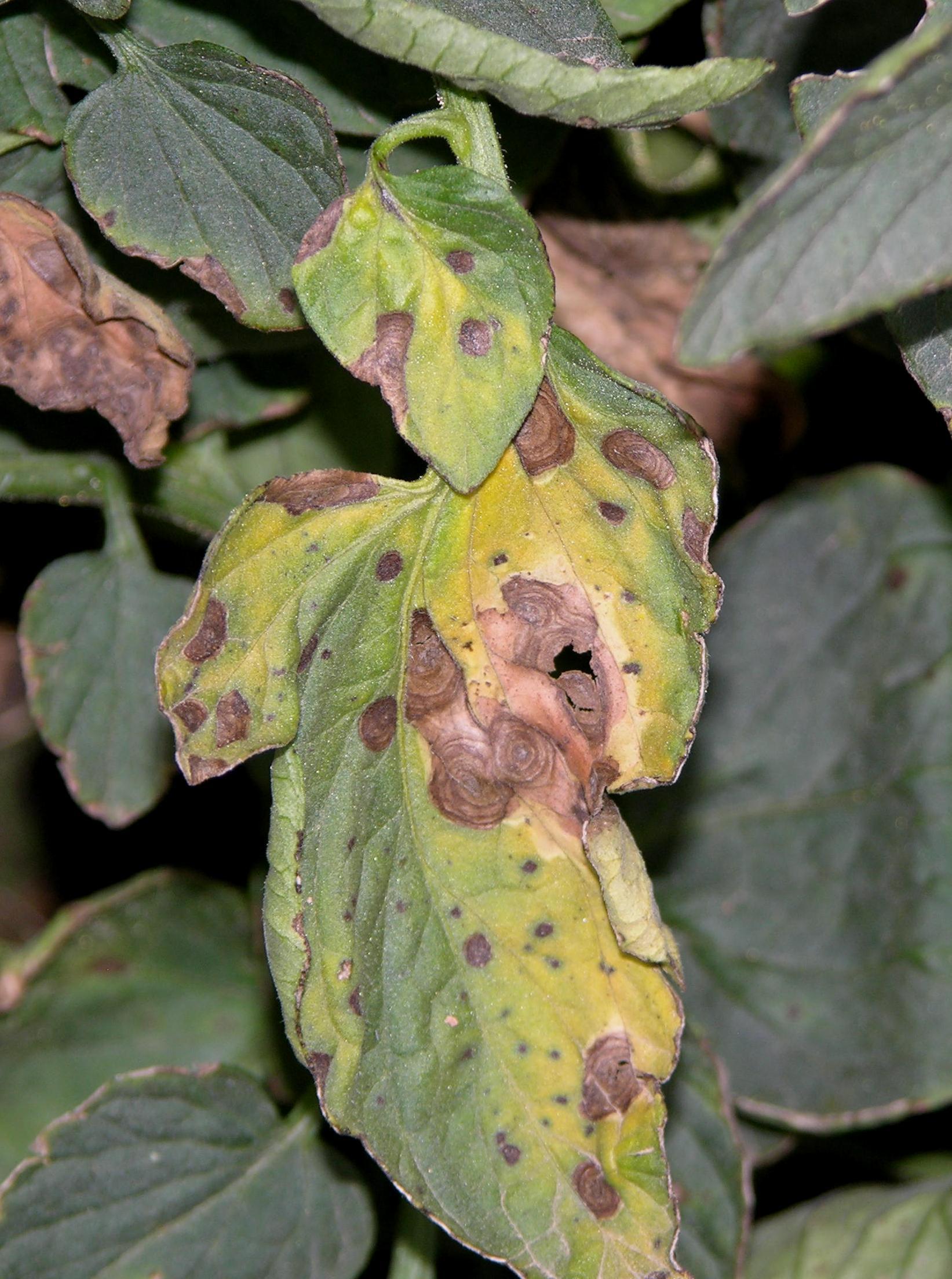
Early Blight
Early Blight Disease and Its Pathogen
Early blight (scientifically known as Alternaria leaf spot) is a dangerous fungal disease widespread in tomato and potato crops. This disease is caused by the microscopic fungus Alternaria solani. Although named "early blight", it actually differs from late blight and, in most cases, occurs frequently in greenhouses and open fields during the hot, dry summer climate of Uzbekistan. The fungus can survive for long periods in plant debris, soil, and infected seeds.
Which Crops Does It Damage?
Early blight mainly infects crops belonging to the nightshade family (Solanaceae). The crops most damaged and suffering yield losses from the disease are tomatoes and potatoes. It can also sometimes be observed in peppers (sweet and hot) and eggplants.
Symptoms of the Disease
- On leaves: Initially, small dark brown or black spots appear on the lower and older leaves. Over time, these spots expand, forming clearly visible concentric (target-like) rings inside them. The leaf tissue around the spots turns yellow, and the leaves dry up and drop off.
- On stems: Elongated, sunken dark brown concentric spots and lesions appear on stems and petioles, disrupting normal nutrition.
- On fruit: Sunken, black, and leathery spots form mainly near the stem end of tomato fruits. A black velvet-like layer of fungal spores is often visible on the surface of these spots.
- On roots: The disease does not directly affect the root system, but root nutrition is severely weakened due to defoliation.
Favorable Conditions for Disease Development
The fungus Alternaria solani develops very rapidly in the presence of high temperatures and periodic moisture. Spore germination accelerates when the air temperature is 24–29 °C and moisture persists on the leaf surface for 3–5 hours due to dew, rain, or overhead sprinkler irrigation. Under Uzbekistan conditions, the disease flares up when air circulation is poor in greenhouses and during evening irrigation in open fields. Additionally, nitrogen deficiency and general plant weakening increase susceptibility to the disease.
Preventive Measures
- Crop rotation: Do not replant nightshade family crops in the same field for at least 3–4 years.
- Resistant varieties: Use certified hybrid and variety seeds that are resistant to early blight.
- Irrigation hygiene: Use drip irrigation systems, avoid getting water on the leaves, and irrigate during the morning hours.
- Field sanitation: Remove and destroy plant debris from the field after harvest, and perform deep plowing.
- Nutrition: Ensure balanced plant fertilization, especially providing adequate potassium and trace elements.
Treatment Methods: Biological and Chemical Measures
Immediate treatment is required when symptoms of the disease appear. Biofungicides containing Bacillus subtilis or Trichoderma harzianum can be used for biological protection during the early stages of the disease.
For chemical prevention and treatment, fungicides containing the following active ingredients are applied: copper hydroxide, mancozeb, azoxystrobin, difenoconazole, thiram, and pyraclostrobin. Strictly follow the label instructions when applying products, do not exceed rates, and observe the pre-harvest interval (waiting period). To prevent the fungus from developing resistance, rotate active ingredients belonging to different chemical groups.
Quick Note for the Farmer
- Are there circular concentric ring spots on the leaves? This is early blight.
- Inspect leaves from bottom to top and pluck off the first infected leaves.
- Stop overhead sprinkler irrigation and switch to drip irrigation.
- Apply preventive treatments with copper-containing or systemic fungicides.
- Do not use the same product consecutively; switch the active ingredient!