
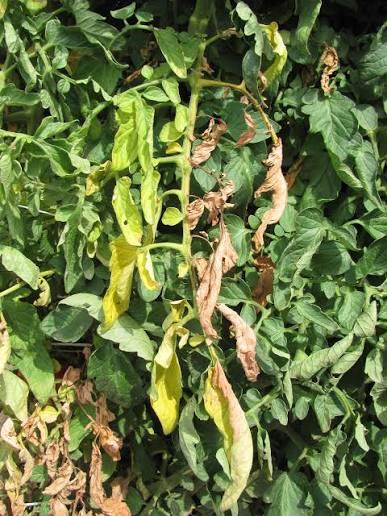
Fusarium Wilt
1. What is Fusarium Wilt and Its Pathogen?
Fusarium wilt is one of the most destructive soil-borne fungal diseases affecting agricultural crops worldwide. It is caused by the vascular fungal pathogen Fusarium oxysporum. The fungus penetrates the host plant's root system, invading the xylem vessels responsible for water and nutrient transport. As the pathogen proliferates inside the vascular system, it blocks the flow of water and releases phytotoxins, causing the plant to wilt, yellow, and eventually die. The fungus produces persistent survival structures called chlamydospores, which can remain dormant in the soil for over a decade, making total eradication nearly impossible once a field is contaminated.
2. Crops Affected
Fusarium oxysporum has numerous specialized forms (formae speciales) that target specific host plants. In Uzbekistan's agricultural regions, it severely impacts key economic crops including tomatoes, potatoes, eggplants, peppers, melons, watermelons, cucumbers, cotton, and legumes. While a specific strain usually attacks only its specific host family, the collective presence of these strains poses a constant threat to both open-field crops and protected greenhouse operations.
3. Symptoms
Symptoms usually manifest when plants enter their reproductive or heavy fruit-bearing stages, particularly during period of high heat and moisture stress:
- Leaves: Progressive yellowing (chlorosis) often starting on the lower leaves, frequently affecting only one side of the leaf stem or plant initially ("one-sided wilting"). Leaves eventually turn brown, dry up, and drop.
- Stems: When cut longitudinally near the base, the vascular tissues exhibit a characteristic dark brown or reddish-brown discoloration. The outer stem may show dark lesions or pinkish fungal spores near the soil line under humid conditions.
- Roots: Stunting and soft rot of lateral roots, leading to a severely compromised root system incapable of absorbing water.
- Fruits: Sunscald and shriveling occur secondary to leaf loss; overall yield is drastically reduced, and fruits remain small and underdeveloped.
4. Conditions Favouring Disease Development
Fusarium wilt thrives in warm soil conditions, with optimal fungal growth occurring at soil temperatures between 25°C and 32°C. This makes Uzbekistan’s hot summer climate particularly conducive to the disease. The pathogen spreads via contaminated soil, infected seed stock, irrigation water, wind-blown dust, and farm machinery or footwear carrying infected dirt. Plants stressed by sandy soils, low organic matter, nitrogen imbalance, or damage from root-knot nematodes are significantly more vulnerable, as nematode feeding sites provide easy entry points for the fungus.
5. Prevention Measures
Managing Fusarium wilt relies almost entirely on preventative strategies due to the long-term persistence of the soil-borne spores:
- Resistant Varieties: Plant certified hybrid varieties bred with resistance genes against Fusarium races (labeled as F, Fol, or Va/Vd).
- Crop Rotation: Implement a 5- to 7-year crop rotation schedule with non-host crops, such as cereal grains (wheat, barley) or corn, to reduce spore populations in the soil.
- Soil Solarization: During the intense summer heat of July and August, apply clear plastic mulching over moist soil for 4 to 6 weeks to heat-sanitize the topsoil layers.
- Irrigation and Soil Management: Avoid overwatering and heavy flood irrigation that spreads spores across fields; utilize drip irrigation systems. Maintain soil pH between 6.5 and 7.0, and apply nitrate-nitrogen rather than ammonium-nitrogen fertilizers.
- Field Hygiene: Clean and disinfect machinery, boots, and tools when moving between fields. Remove and burn or deeply bury infected crop residue immediately after harvest.
6. Treatment Options
Once a plant shows internal vascular wilting, chemical cures are ineffective for that specific plant. Management focuses on soil treatments, bio-fungicides, and protecting non-infected neighboring plants.
Biological Controls: Soil applications or seed treatments using beneficial microbes such as Trichoderma harzianum, Trichoderma viride, or Bacillus subtilis can suppress the pathogen by competing for nutrients and colonizing the root zone before the fungus attacks. Apply these during seeding or transplanting.
Chemical Controls: Preventative soil drenching or seed dressings can be performed using systemic active ingredients such as carbendazim, thiophanate-methyl, prochloraz, or triazole fungicides like tebuconazole and difenoconazole. Copper-based compounds (e.g., copper hydroxide or copper oxychloride) may be applied around the base to suppress secondary spread.
Note: Always follow the specific product label instructions regarding application rates, safety measures, and mandatory pre-harvest waiting periods (PHI). Alternate fungicide chemical groups (FRAC codes) regularly to prevent the development of resistant fungal strains.
7. Quick Checklist for Farmers
- Did you choose Fusarium-resistant seeds or rootstocks?
- Have you rotated the field away from nightshades/cucurbits for at least 4 years?
- Are lower leaves yellowing on just one side of the plant?
- Did you cut the main stem to check for brown vascular ring discoloration?
- Are farm tools and machinery disinfected before entering clean fields?
- Are you using drip irrigation instead of surface flooding?