
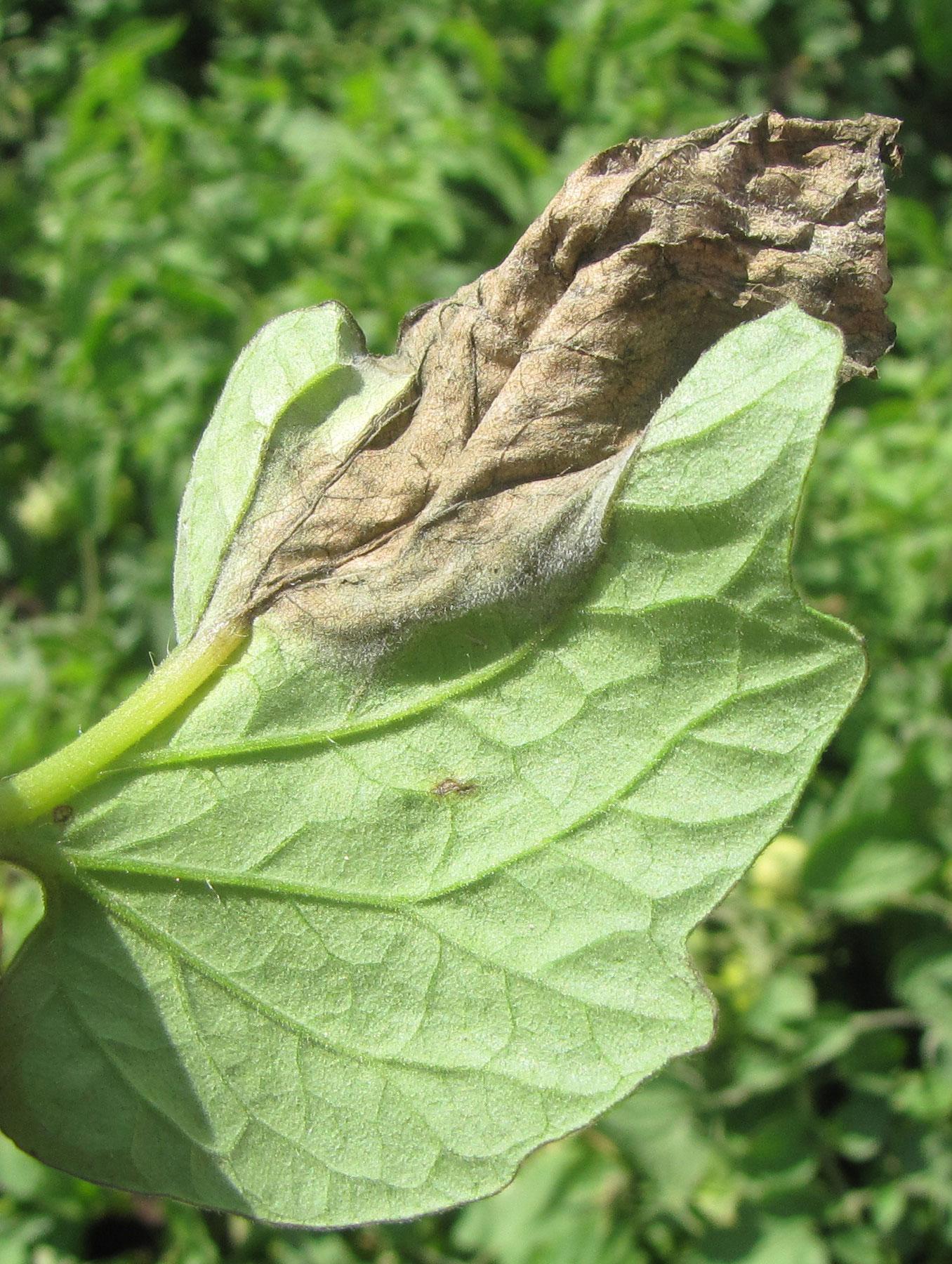
Late Blight
What is Late Blight and Its Pathogen
Late blight is one of the most destructive and fast-spreading fungal-like diseases affecting solanaceous crops worldwide. It is caused by the oomycete (water mold) Phytophthora infestans. Unlike true fungi, this pathogen produces swimming zoospores that move rapidly through moisture. Under favorable conditions, it can destroy an entire field of tomatoes or potatoes within a few days. In Uzbekistan, late blight is a critical threat during cool, wet spring periods, in unheated plastic greenhouses with excessive condensation, and during high-humidity overhead irrigation events.
Affected Crops
Late blight primarily attacks plants in the Solanaceae family. Its main commercial hosts are potatoes and tomatoes. Occasionally, it can also infect eggplants, peppers, and wild solanaceous weeds (such as hairy nightshade), which act as natural reservoirs for the pathogen between cropping seasons.
Symptoms of Late Blight
Symptoms develop rapidly on all above-ground plant parts and underground tubers:
- On Leaves: Large, irregular, water-soaked pale green to dark brown spots appear, often starting near leaf tips or edges. In high humidity, a fine white cottony mold (spores) develops on the underside of the leaf corresponding to the lesions. Affected leaves quickly shrivel, turn black, and die.
- On Stems and Petioles: Dark brown to black, greasy-looking lesions form along stems and leaf stalks, causing structural weakness and stem collapse.
- On Tomato Fruit: Firm, rough, dark brown to olive-colored greasy patches appear on green or ripe fruits, usually starting near the stem end. Secondary soft rot bacteria often invade, causing the fruit to rot completely.
- On Potato Tubers: Irregular, sunken, reddish-brown to purplish patches form on the skin. Slicing the tuber reveals a dry, reddish-brown dry rot extending into the flesh.
Favorable Conditions for Disease Spread
Phytophthora infestans thrives in cool, highly humid environments. Optimal temperatures for spore production and infection range from 15°C to 22°C, combined with relative humidity above 90% or continuous leaf wetness for 8 to 12 hours. Spores are easily carried by wind, splashed by rain or overhead sprinklers, and transferred on tools, clothing, and infected seed tubers. Hot, dry summer weather typical of lowland Uzbekistan temporarily halts disease progression, but the pathogen survives inside greenhouse structures or infected plant tissues.
Prevention and Cultural Control
Preventative management is essential because controlling late blight after an outbreak is extremely difficult:
- Resistant Varieties: Plant potato and tomato varieties with proven field resistance or tolerance to late blight suitable for local climatic conditions.
- Certified Seed: Use only certified disease-free potato tubers. Never plant seed tubers showing internal brown discoloration.
- Crop Rotation: Practice a 3-to-4-year crop rotation, avoiding solanaceous crops in the same field consecutively. Rotate with cereals, corn, or legumes.
- Irrigation Management: Use drip irrigation instead of overhead sprinklers to keep foliage dry. In greenhouses, improve ventilation to eliminate morning leaf condensation.
- Field Sanitation: Promptly remove and burn infected plant debris, self-seeded potato volunteers, and nightshade weeds. Avoid leaving cull piles near production fields.
Treatment Options
Chemical and biological interventions must be implemented preventatively or at the very first sign of disease symptoms to be effective.
Biological Controls: Bio-fungicides based on beneficial microorganisms like Bacillus subtilis, Bacillus amyloliquefaciens, or Trichoderma harzianum can be applied early in the season to suppress spore germination on foliage and protect root systems.
Chemical Controls: Protective and systemic fungicides are crucial during high-risk weather. Contact copper-based active ingredients (e.g., copper hydroxide, copper oxychloride, or tribasic copper sulfate) and mancozeb act as effective protectants before infection occurs. Systemic and translaminar active ingredients—such as cyazofamid, dimethomorph, metalaxyl-M, propamocarb, mandipropamid, or azoxystrobin—provide curative and deep tissue protection during active disease pressure. Always follow the manufacturer's product label strictly, respect the specified waiting period (pre-harvest interval) before picking, and alternate active ingredients from different chemical groups to prevent pathogen resistance.
Quick Farmer Checklist
- [ ] Inspect potato seed tubers for internal reddish-brown rot before planting.
- [ ] Install drip irrigation systems to prevent leaf wetness.
- [ ] Monitor humidity and leaf wetness in greenhouses; ventilate daily.
- [ ] Scout fields twice weekly during cool, moist spring weather.
- [ ] Apply protective copper-based or bio-fungicide sprays before rainy periods.
- [ ] Rotate chemical active ingredients to avoid fungicide resistance.
- [ ] Destroy infected crop residues and cull piles immediately away from the field.